
Why we love to hate dimes square content: ‘trash culture’ for the chronically online
I really can’t escape clavicular. soon after i wrote my blogpost about why i think he is quite algorithmically popular (memetic descriptors help you become more visible in the algosphere), he spawned in the dimes square extended universe. so then, I had to look.
I follow dimes square content on twitter/x the way that some of my friends follow the housewives franchise on streaming services. if you don’t know what dimes square is then “stop reading now and save yourself”: every self-serious writer has to insert this annoying phrase when writing about dimes square lest their audience think that they are being ‘for real’. “is this person genuinely researching this trashy subculture?” “do they really want to write about this cesspit of content?” well you know what? i am being for real. I thrive in the algo-muck.
anyways, if you really want to know more about dimes square, then here, welcome to to the sick and twisted world of the online pseudo-garde.
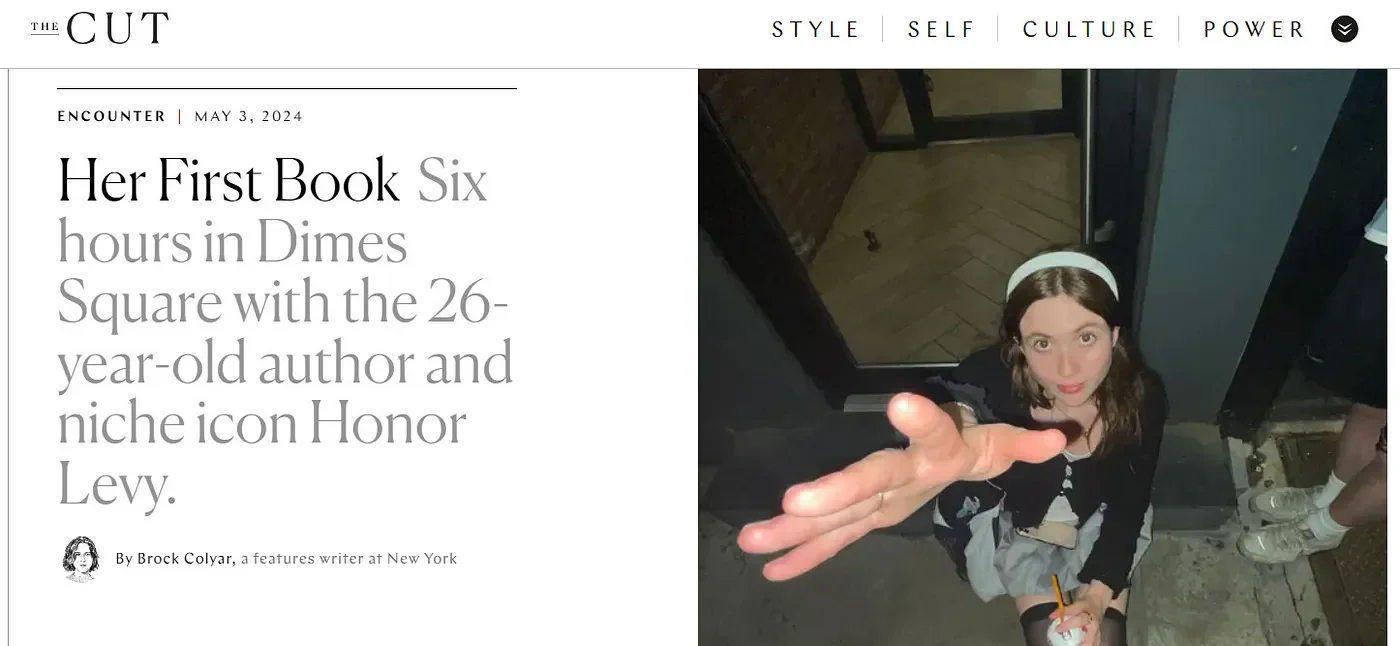
dimes square is a content genre made by and for chronically online (sometimes authentic, and sometimes posturing) intellectuals who flirt with leftist politics and reactionary aesthetics (its ironic!!! or is it?… you will never know…*tips fedora*). ‘dimes square’ as a memetic concept was made popular by the red scare podcast. this podcast was started by two chronically online women who said that they wanted to point out the moral inconsistencies in ‘woke culture’, girlboss feminism, usamerican liberalism, and other cringey left of the centre cultural products. they did this by posting, replying and reposting, creating viral (mainstream expansion to capture attention) and niche (social glue for their community) moments, engaging with fan accounts and using pretty well-known platformised cultural production tactics. they (alongside with other podcasters and posters) expanded their audiences through their involvement in internet discourse (or ‘beef’, depending on your persuasion) and constant podcasting. the time was also right for their brand of politicking (here’s s lesson for the cultural producers out there: if you consistently post while making time to argue with others online, you will almost always be able to grow your ‘reach’).
the name ‘dimes square’, according to what I’ve read online, comes from a restaurant called ‘dimes’ in this specific neighbourhood in new york city where ‘these people’, like the red scare podcasters and art-adjacent terminally online bohemian reactionaries, were hanging out at. i really don’t know where this place is or what it looks like but i’ve heard that the neighbourhood is a place where niche internetposters venture out into ‘the real world’. despite its boring story, ‘dimes square’ has become a container-word for this specific content genre. some of its practitioners hate the descriptor ‘dimes square’. in fact, they will declare things like ‘dimes square doesn’t even exist’ or ‘dimes square was never a real thing’. but what they say about dimes square ultimately does not matter! why? because ‘dimes square’ is most definitely a real ‘thing’ even if it’s not a real ‘place’. in fact, dimes square is the realest thing it can be in this era of brainrotslop: it is a genre of content.
Here’s my breakdown of what makes this a cohesive content genre:
theme: the central theme is the post-ironic rejection of liberal usamerican middle-class morality, which is stands in for the grander psychosocial theme of retroactive self-hatred.
narrative arc: the hero’s journey is the content’s journey, it’s one and the same. the hero posts, the hero feuds, the hero posts again, the hero is cancelled, the hero is adopted by other cancelleds, the hero posts again and so on and so on *sniff*
iconography: symbols and images associated with pro-ana tumblr from around 2011-2013, catholicism as imagined by the pinterest algorithm, 3-4 memetic books (sexual personae, that one by lasch, bronze age slop etc.), twitter/x as place, khachiyanesque mullets, high fashion items and expensive clothing i don’t understand but fashion-literate people will definitely recognise
setting: (1) online, (2) onlineworld interacting with real life arts and literary events in new york city, (3) profile pages of dimes square characters
mood and tone: cynical, pointed, antagonistic, vulgar, humorous, ironic, prickly, intentionally offensive
form: tweets, screenshots of tweets, subreddits, telegram channels, discord channels, patreons, instagram selfies, substacks and blogposts, and of course, the crowning jewel: memes

overall, ‘dimes square’ is a juicy, platform-optimised content genre. in fact, it can be considered trash culture for the average chronically online ‘intellectual’ (pseud or otherwise).
why does dimes square content perform so well on social media platforms? imho, there are three factors that make dimes square a viral genre of content (1) its post-ironic posture and (2) its built-in antagonism and vulgarity, (3) its moralism.
(1) this content genre works very well on the platform (it travels far and wide beyond its locality) because of its post-ironic lens. post-irony is perfectly aligned with the so-called attention economy on platforms because when you create content through a post-ironic standpoint, you never run out of content. post-ironic content can always negate itself, without contradicting itself. a post-ironic post can both affirm and deny its message. so: it can never really be stopped, it’s constant in its lack and therefore in its abundance. when your content does not have to faithfully represent a sincerely-held belief, then you can say and post pretty much anything and get away with it. you can never run out of things to say! the well of post-ironic memes is deep, it goes all the way down to the earth’s core.
(2) their vulgarity and intentional offensiveness create activity around dimes square posts, as well as all the anti-dimes square posts about the dimes square posts. this then creates a secondary group of ‘content critics’ who boost this content genre further, sending dimes square posts beyond their normal orbit, causing the genre to expand and collapse on itself continuously. the most recent example of this is the twitter discourse surrounding the elena velez, clavicular, remilia algo-muck on twitter and elsewhere. dimes square content is a hate-watch, or moreso a ‘hate-scroll’, for many (both their detractors and their fans, see: r/redscarepod). it’s similar to why ‘respectable people’ hate-watch ‘trash tv’: love island, baddies, the bachelor, even judge judy. watching something while declaring how bad it is makes you feel above it all, as you can still enjoy the content but not have to associate yourself with the message of the content. you can have your cake and eat it too when you hatescroll dimes square.
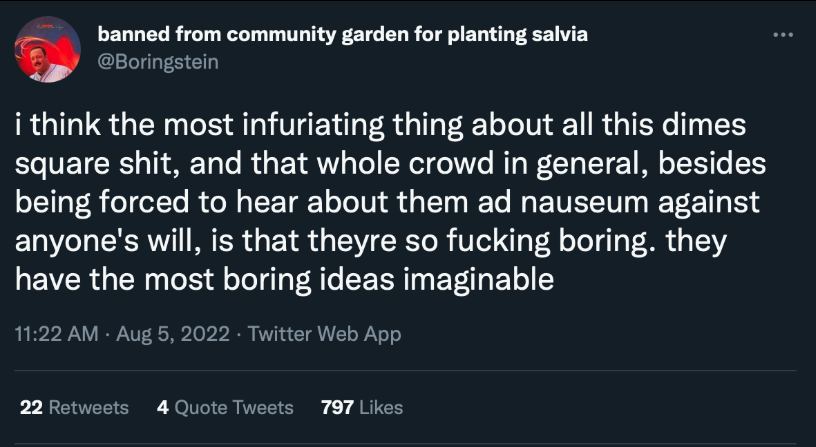
(3) the message of the content is based on a continuous loop of cultural and moral critique and as a result, it never runs out of steam. dimes square posters are always unhappy about the next woke thing, in fact most of them have built careers off moralising about le wokeism in memetic format (tweets, memes, podcasts). they do this through a post-ironic lens, so they can always go back on their word and claim that they didn’t mean it, that they just did it for the vine. similarly to the post-ironic lens, moralism affords people with endless content that can always be reheated and re-introduced. moral philosopher T. M. Scanlon reminds us that “working out the terms of moral justification is an unending task” (1998). people get heated about their morals. and no one’s morals are ‘true’. moralism gives the poster the opportunity to manufacture eons and eons worth of scrolling time for the chronically online individual.
so to answer the question i posed at the title: why do we love to hate dimes square content? it’s ‘trash culture’ for the chronically online (people love messy online drama) and its platform-forward (it goes viral). finally, this kind of edgy stuff appeals to the post-ironics that have multiplied in the art and literary world… also i must say, never underestimate a publicist who understand internet culture.
